The Book
About The Author
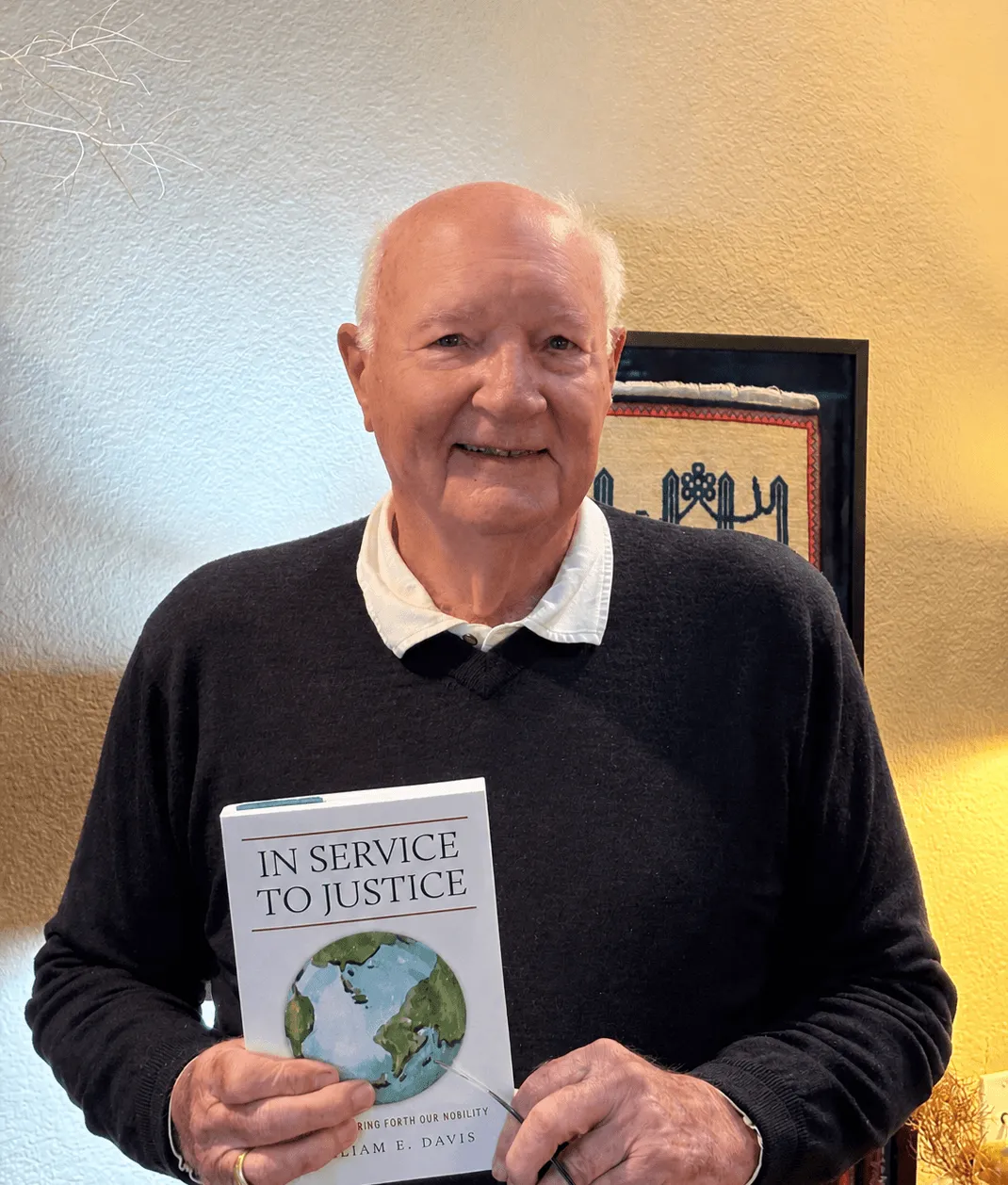
The Man Behind The Memoir
For over eight decades, William E. Davis, III has built a life defined by unwavering dedication to his family and an entrepreneurial spirit that shaped a lasting business legacy. From humble beginnings to steering industry innovations, his journey is a testament to the power of resilience, hard work, and the enduring strength of the relationships he has forged.
He wrote this memoir not to boast accomplishments, but to preserve the lessons learned along the way. It is a heartfelt reflection intended to guide future generations, offering an honest, unvarnished look at the triumphs, the inevitable challenges, and the profound joy found in a life well-lived.
A Lifetime Captured In Print
THE MEMOIR
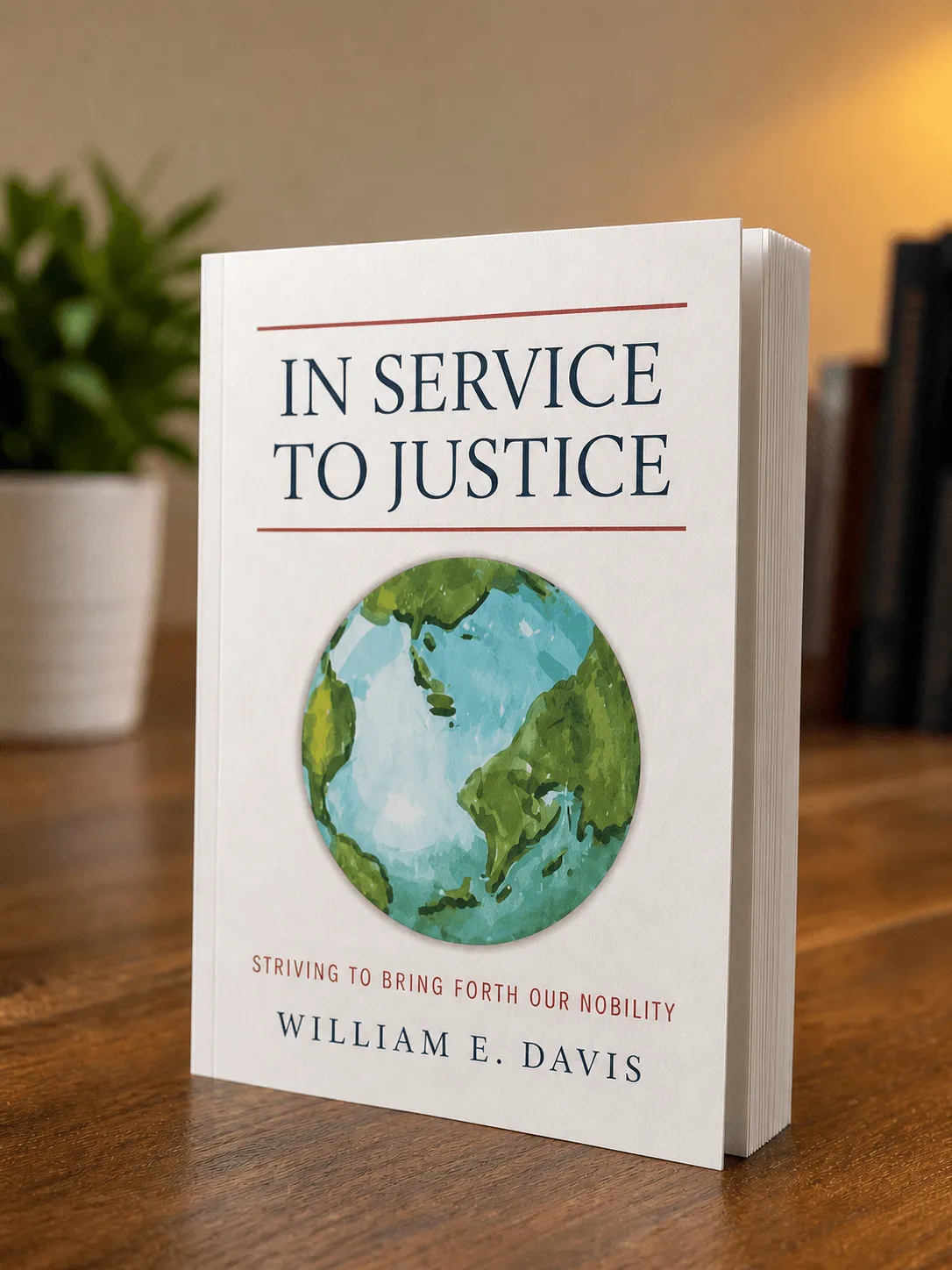
Step into an 80-year journey of resilience, business acumen, and family devotion. This memoir isn't just a recounting of the past: it is a masterclass in building a legacy from the ground up.
It is an account of a life framed by family, faith, and service, In Service to Justice is a part spiritual and part adventure story. Following Bill from the hills of eastern Kentucky, one man goes on a quest to improve justice in Kentucky, California, Latin America, and the Middle East. With each page, we are forced to look inward and reflect on our own virtues and how we stack up compared to others.
- Overcoming early business challenges to define lasting success.
- The core values that kept the family united through decades.
- Timeless lessons in leadership, calculated risk, and legacy.
Read the Foreword
"It is 2001. I am at lunch looking at a cooked guinea pig looking back at me. It is the only delicacy my hosts-an Indigenous family living in the Peruvian Andes-can offer me. But I am more than grateful for the opportunity to partake of it and speak with them about their concerns for their land and their lives, as part my role as chief mediator for a World Bank project..."
Striving to Bring Forth Our Nobility
"Only if you perceive honor and nobility in every human being...will you be able to champion the cause of justice. "Universal House of Justice, Baha'i Faith
It is 2001. I am at lunch looking at a cooked guinea pig looking back at me. It is the only delicacy my hosts-an Indigenous family living in the Peruvian Andes-can offer me. But I am more than grateful for the opportunity to partake of it and speak with them about their concerns for their land and their lives, as part my role as chief mediator for a World Bank project.
Unnerved by the guinea pig's stare, I ask myself, How did Billy Davis from Hazard, Kentucky end up in this place at this time, heading a team to mediate a dispute between a poor Indigenous people living in the high Andes and the wealthy owners and managers of an American/Peruvian gold mine situated even higher in the Andes? I cannot draw a straight line from my earliest days in eastern Kentucky as a towheaded kid playing with friends in a coal mine slag to my more recent days as a legal consultant on the development of the rule of law and alternate dispute resolution all around the world.
Growing up in Appalachia had taught me, in some ways, that I was inferior to most other people. In fact, in April 1994, when my alma mater, Transylvania University, gave me a Distinguished Service Award, a former professor approached and told me, "We did not think you would ever amount to much." Yet I have had a truly unusual life. From "being reared" in the hills of Eastern Kentucky to meeting Presidents of several countries and one King to working in over fifty countries at the highest levels of justice reform, my journey has not been typical for a "Duke of Hazard [sic]."
As I look back on my life, one aspect that becomes clear to me is how purposeful I have been. Once I was able to see my path in the field of justice administration, the pattern of my life was set. Early on with the California Judicial Council, I had a sense that I needed to help lead a major change in the U.S. justice system. This desire was influenced by the teachings of the Baha'i Faith: "The best beloved of all things in my sight is Justice." During the course of this journey, I did become a member of the Faith.
Since then, I have constantly sought to find ways to apply spiritual principles to the problems and challenges that come my way. I have not always been successful, but I've always thought that principles not applied to real life have less validity. In this book, I discuss one notable example of how I used a Baha'i principle on nobility to devise a strategy to confront corruption (Chapter Ten).
The dominant theme of my life has been striving to bring forth the nobility in each of us in the pursuit of justice, both in the States and elsewhere in the world. Advancing the cause of justice is a laudatory goal but one that seems elusive; the absence of a commonly agreed-upon standard allows for the idea of justice to remain largely abstract. I have always sought to find ways to reduce the abstract to the practical. In this book, I relate many experiences of making justice translatable and real for people.
Writing about myself has not been easy. Reliving over eighty years has brought back painful memories that I have sought to bury in the past. The entire process has taken me longer than I expected because of the emotional turmoil that so characterized some of my earlier life experiences. Having said that, I am grateful I stayed with the endeavor and finished it.
As a member of the Baha'i Faith, I have tried to cultivate a perspective on life that does not seek to glorify myself. The Faith encourages us to manifest humility and self-abnegation in our lives. I have wrestled with these concepts in writing this memoir, trying to relate my personal and professional experiences in a balanced fashion.
I have never been one to talk about myself; so many of the stories in this book were not known even to my wife and children. Writing is also not my strong suit. I am an oral storyteller, a practice that came from a grandfather who used to put me in a swing on his front porch in Jackson, Kentucky and tell tall tales. That said, I tried to represent all the situations in this book as best as my memory could recall.
Though I can hardly believe that I have lived over three quarters of a century, it's harder to believe that my companion, consort, colleague, spiritual teacher, friend, and mother of our children, Connee, has been with me for over fifty-five years. Without her constant and ever-present vigilance about our well-being, I do not believe I would be alive today. She is and has been a loving partner and a constant inquirer of the reality that surrounds us.
At the end of 2018, our youngest daughter, Hillary, suffered a heart attack at forty-two. As members of the Baha'i Faith, Connee and I believe in an afterlife; at the same time, we are taught that we are sent tests that enable us to demonstrate our faith through our actions. Yet, it was difficult as a parent to see my dynamic and strong daughter in a hospital bed, hugging her seven-year-old son, William, as she prepared for surgery. The shock of this event left me again asking questions about the basic meaning of life and about our spiritual journeys, which I'm compelled to talk about in this book.
Everyone has a spiritual journey. Some are conscious and involved in the effort to draw closer to the Divine Source of Life, while others may not be aware of the dialectic between the "material and spiritual dimensions of life." Because the spiritual dimension of my life has been a dominant force, it receives prominent attention in this work.
Trying to maintain a balance between personal beliefs and professional expectations was and is always a challenge. When I made career decisions that were based more on an appeal to status rather than service, I almost always regretted those decisions.
Although my spiritual journey guided much of my professional career, I did not want to make this into a book about religion. I have thus separated many of my Baha'i stories into "Baha'i Interludes," which are interspersed throughout the book.
Why am I telling my life story? Yes, my friends requested that I do it. But perhaps young readers thinking of embarking on a new life in law might also see this tale as a possible trajectory for their own careers, applying spiritual principles to open up justice systems to those who have not historically had their voices heard.
This book is also a tribute to those friends and colleagues who helped me along the way. I will never forget the contributions they have made to my life and to reforming the administration of justice around the world. I write about these specific contributions in the Thank You section in the back of the book. I owe special gratitude to Elaine Mehollin Earl-Cooper, who accompanied me in writing this book. Her expertise and thoughtful observations were indispensable.
I hope you enjoy reading about my life as much as I enjoyed living it.
Also available as an eBook and Audiobook.
READER REFLECTION
A Thoughtful Reflection on In Service to Justice
“What interests me about In Service to Justice is the distance it travels without losing sight of one very personal question: what does a commitment to justice require from the person responsible for building the system? Your journey from rural eastern Kentucky into court administration across California, Latin America, and the Middle East makes that question especially compelling because the work is never presented as merely procedural.”
— Sivonnia Martins
Reader of In Service to Justice
I was particularly drawn to the way you connect the mechanics of judicial reform with the ordinary person standing on the other side of the system. Filing structures, judicial training, modernization, and institutional reform can sound abstract until they are connected to whether someone's voice can actually be heard without power deciding the outcome. The combination of those experiences with your reflections on faith and personal accountability gives the book another layer, asking not only whether an institution functions, but what kind of character is required to serve within it.
I’m a verified reader in a StoryGraph reading community where our current quarterly reading challenge is already underway. We approach books through intentional reading, different perspectives, deeper interpretation, meaningful discussion, and reflection. In Service to Justice feels especially suited to that kind of conversation because it brings together professional experience, international encounters, spirituality, and the human consequences of institutional decisions.
I’d like to bring the book into that reading conversation while this challenge is still underway. There is room for reader reflections and discussion, and, if the timing works, an author conversation could allow readers to explore some of the experiences behind the reforms and the principles that guided them.
One question I’d genuinely like to hear you reflect on is this: after spending decades working inside legal systems across very different cultures, what did you learn about the difference between building a system that follows the rules and building one that actually allows human dignity to survive within those rules?
READER REVIEWS
Words From Early Readers
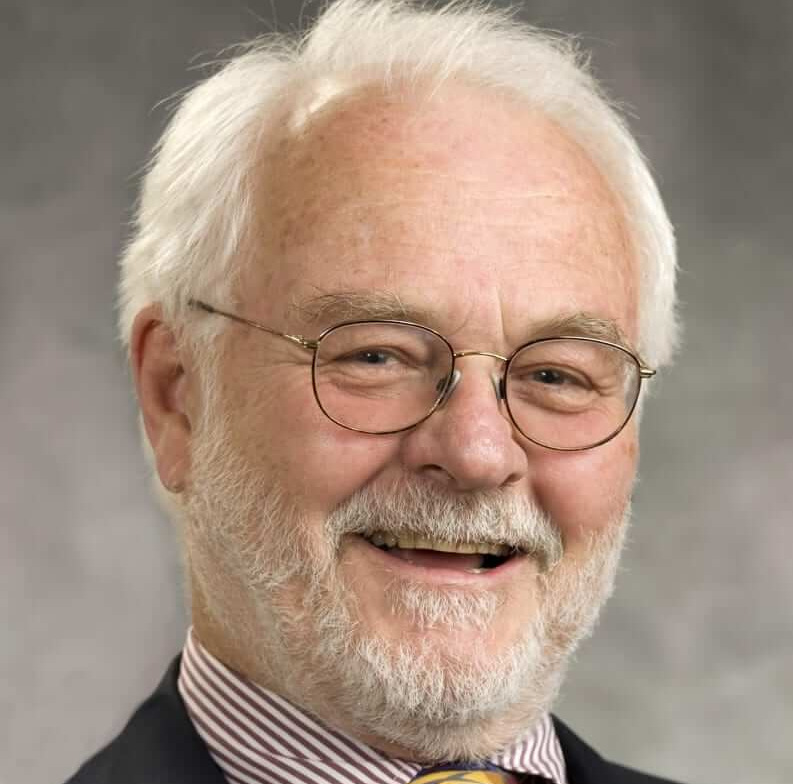
“I believe that Bill Davis has done more than any other single individual—be they Minister of Justice, Prime Minister, or Chief Justice of a Supreme Court—to bring about significant court reform to improve the quality of justice for hundreds of thousands of ordinary people around the world.”
— Professor Malcolm Feeley, Claire Sanders Clements Dean's Chair (Emeritus), Director of the Center for the Study of Law and Society (Emeritus), at U.C. Berkeley, College of Law
I believe that Bill Davis has done more than any other single individual—be they Minister of Justice, Prime Minister, or Chief Justice of a Supreme Court—to bring about significant court reform to improve the quality of justice for hundreds of thousands of ordinary people around the world. He accomplished this not with a utopian dream, the pocketbook of the Gates Foundation, or even power and might.
Rather, he succeeded by dint of personality and perseverance, first as a Peace Corps volunteer, then as a civil servant at the state and federal level, and finally as the head of a small consulting firm, which obtained modest-sized contracts to confront mountainous problems. He then moved mountains. How? By his innate modesty, by listening, by drawing in like-minded people, by insisting on consensus, and by empowering those who would live with the consequences of innovations long after he left the region or the country.
The Japanese occasionally single out a quiet but distinguished person and honor them as “a National Living Treasure.” If the United States had such an award, surely Bill Davis would be a recipient.
-Professor Malcolm Feeley, Claire Sanders Clements Dean’s Chair (Emeritus), Director of the Center for the Study of Law and Society (Emeritus), at U.C. Berkeley, College of Law

“Memories matter when they help us find deeper truths in our own lives, when they help us face bigger questions with insight, solve impossible problems, and find joy and meaning in life. Bill's story does all of these.”
— Robert C. Henderson, Member of the National Spiritual Assembly of the Baha'is of the United States
Finding the courage to spend one's life on an independent search for truth and justice guided by faith is a primary challenge facing America today.
Bill Davis's story gives us a model of what such a search looks like - from the coal mines of Hazard, Kentucky, to the Peace Corps in Chile, to the World Center of the Baha'i Faith and to some of the largest justice systems of the world.
Memories matter when they help us find deeper truths in our own lives, when they help us face bigger questions with insight, solve impossible problems, and find joy and meaning in life. Bill's story does all of these. I am grateful for his inspiring story and to be his friend.
-Robert C. Henderson, Member of the National Spiritual Assembly of the Baha'is of the United States
“Momma Crain gave her grandson, Bill Davis, a sense of purpose through her selfless service to others. Bill followed Momma Crain's lessons, dedicating his life to peace and justice. Now, he has expanded his grandmother's teaching by giving us a gift: a book describing how to serve people worldwide.”
— Luis Moreno Ocampo, co-prosecutor for the trials of the Argentina military, as depicted in the Argentinian film submission for the 2022 Oscars, Argentina 1985; selected first Chief Prosecutor of the International Criminal Court
Momma Crain gave her grandson, Bill Davis, a sense of purpose through her selfless service to others. Bill followed Momma Crain's lessons, dedicating his life to peace and justice. Now, he has expanded his grandmother's teaching by giving us a gift: a book describing how to serve people worldwide.
I learned from Bill Davis when I worked in Argentina and, later, I applied his ideas when I became the Chief Prosecutor of the International Criminal Court.
Baha'u'llah's teachings guided Bill's life: he embraced a vision of a world that is interconnected and vibrant. He is visionary and pragmatic. He aimed to build a new society based on the oneness of hu- mankind. He learned to "go only through doors that open".
Bill knows that it is impossible to create a global or domestic com- munity without conflicts. Success is to learn how to establish peaceful models to manage violence, and failure is not to try. Bill continues trying, always with a smile on his face.
With this book, Bill Davis becomes our Momma Crain. Thank you, Bill.
-Luis Moreno Ocampo, co-prosecutor for the trials of the Argentina military, as depicted in the Argentinian film submission for the 2022 Oscars, Argentina 1985; selected first Chief Prosecutor of the International Criminal Court
“His life, reflected in this very candid, moving and engaging memoir, is a testimony to how a clear purpose and unswerving resolve lit by unadulterated altruism are the cornerstone of a great life of service. Anyone embarking on such a journey would be well advised to read this man's inspiring story.”
— Augusto Lopez-Claros, Executive Director of Global Governance Forum, formerly Director of World Bank's Global Indicators Group, Chief Economist and Director of Global Competitiveness Program at World Economic Forum
Bill's quest of service took him from his homeland to promote mediation in communities, courts, and businesses in other regions of the world, including the Middle East and Transcaucasia, in a determined and tireless fight for justice. His life, reflected in this very candid, moving and engaging memoir, is a testimony to how a clear purpose and unswerving resolve lit by unadulterated altruism are the cornerstone of a great life of service. Anyone embarking on such a journey would be well advised to read this man's inspiring story.
-Augusto Lopez-Claros, Executive Director of Global Governance Forum, formerly Director of World Bank's Global Indicators Group, Chief Economist and Director of Global Competitiveness Program at World Economic Forum

